Chickpeas and Broccoli Rabe

This is a dish that's very easy to make, doesn't take much time. (Broccoli takes a bit more time than Broccoli Rabe just because you have to trim the skins off of the broccoli stems, but we're talking only a matter of minutes.)

The following recipe serves two and can be the main dish with bread (or toast) as a side. If serving with other food items, then this would probably be enough for four people.

INGREDIENTS

At least 1 cup extra-virgin olive oil. More if Rob will be eating.
A minimum of 6 garlic cloves, peeled
A couple of teaspoons of dried Rosemary
A couple of teaspoons of fennel seeds
½ teaspoon dried chile flakes
1 bunch broccoli rabe (about 1 pound), woody stems trimmed (Although I've made this with broccoli before, too, and it came out just fine. Cut the tough skin off of the broccoli stems.
1 (15-ounce) can chickpeas, drained and rinsed
salt and black pepper

PREPARATION

Heat the oven to 375 degrees. In a large ovenproof skillet or Dutch oven over medium heat, combine the oil, garlic, rosemary, fennel seeds and chile flakes. Cook until the mixture is fragrant and the garlic is golden, 3 to 5 minutes.

Turn off the heat, then add the rabe and toss until coated in oil. Scatter the chickpeas around the rabe and stir to coat in oil. Season generously with salt and pepper.

Cover with a lid or foil and bake for about 40 minutes, until the chickpeas are soft and crispy in parts and the broccoli rabe is tender, but the stems are not mushy.

Let cool slightly.

Serve with bread. (Toast or crusty bread both work well.)

This recipe was taken from the New York Times cooking section -- Olive Oil-Braised Chickpeas and Broccoli Rabe, by Ali Slagle. 

Salmon and Rice Dish

Ingredients:

2 cups dry rice
water
1 onion
butter or olive oil
1 or 2 cans of salmon
salt and pepper
1 can olives (black or green)
1 cup(ish) cheddar cheese
2 eggs
butter
lemon juice (or lemon packets)

Directions:

Preheat the oven to 350 degrees.

Cook 2 cups of rice with 4 cups of water and a wee bit of salt. Bring to a boil, then turn to medium and put a lid on. You'll know the rice is done when you can't see any more water. But you can always test a grain to be sure.

While the rice is cooking, chop up the onion and sautee it in oil or butter until soft. (Medium heat.)

Drain the liquid from the salmon. (If there are dogs or cats around, divide the liquid into little bowls and set down simultaneously to reduce fighting.)

Mix cooked rice, sauteed onions, drained salmon, drained olives, about 1 teaspoon of salt and a few grinds of pepper. Add a wee bit of the cheese (save the rest for the top) and mix in the two eggs.

Pour mixture into a casserole dish or brownie pan.

You can either put the cheese on at this point and bake. Or you can bake it a bit, then put the cheese on. There are two advantages to going the second route. You'll have a better view of the rice dish to know if it's still eggy or if it's just starting to brown up. And the cheese won't burn while the rest hasn't fully cooked yet.

I think you'll need to cook this for around 20 - 30 minutes. If you don't put the cheese on till later, aim for about 15 minutes in.

While it's baking, make the sauce. Melt a stick (or half a stick... depending on how much sauce you want) in a small pan. Add lemon juice (or you can use the little lemon packets), salt and pepper. Taste it to see if it needs anything added.


When Nana first made this dish, she'd make it in a cupcake pan. That made it easy to portion out and can be a fun way to serve friends. But a big dish works just as well. 

This is a fairly easy to make cake from Bob's Red Mill. I put jam in the center and used an icing recipe that was essentially one can of coconut milk, a bit of sugar, and some gelatin.


When your garden is bursting at the seams with tomatoes, this is an incredibly tasty way to eat them up. This is also a good way to use tomatoes that are starting to go bad on one side, but are just fine on the other side. Toss the bad bits in the compost and throw the rest in the soup.

Ingredients:
Couple tablespoons of olive oil
1 medium - large onion or 2 - 3 cloves garlic... or both
Lots and lots of tomatoes
1/2 - 1 cup bone broth
salt and pepper to taste
1 cup cream
fresh basil to taste


Directions: 
1. Pour some olive oil into the bottom of a soup pot set over medium heat. Add diced onions/garlic. While that is simmering, begin chopping and adding tomatoes. I essentially keep adding tomatoes until a. I've reached about three quarters of the way up the pot and don't want the soup to bubble out or b. I've run out of tomatoes. Stir and simmer while you continue to chop and add.

2. Once you've decided to stop adding tomatoes, add the bone broth and let the tomatoes simmer for about 10 - 15 minutes. This gives the tomatoes a chance to break down and become soupy. Add salt and pepper and if you want a little heat, add a little of your favorite spicy additive now.

3. Once the tomatoes have broken down to a consistency that looks soupy, add the cream and basil. Let cook just a few minutes longer and serve. 

Meaty Spanish Rice

This is a great way to use fresh tomatoes in the fall. So you'll note that there's an "or" in the ingredients depending on the time of year.

It's also a good way to use up leftover rice.

Ingredients:
1 pound of beef
1 medium onion or half a large onion (or more if you really like onions)
1-3 cloves of garlic, minced
5-15 fresh tomatoes, diced (depending on the size of the tomatoes and how tomatoey you want your rice to be)
or 1 6 oz. can of tomato paste and 1 14 oz. can diced tomatoes
1/2 - 1 cup homemade bone broth
1 teaspoon salt
pepper
couple of dashes of chili powder and cumin
2-4 cups rice... whatever you have leftover

Directions:
1. Brown the beef. When beef is nearly done, add onion and garlic.
2. Add the tomatoes or cans of tomato paste/chopped tomatoes, bone broth, salt, pepper and chili and let simmer for about 10 minutes.
3. Add the rice, let simmer another 5 minutes.

When reheating, add about 1/4 - 1/2 cup more broth so that the rice doesn't scorch on the bottom of the pan. This also adds in more of the good, tummy healing stuff that's in the bone broth. 

Chicken/Shrimp Curry


Ingredients
2 cups rice
2 tablespoons of butter or olive oil
1 small or medium onion, chopped
1/2 teaspoon ground ginger or a small piece of chopped up fresh ginger
2 - 3 tablespoons of Thei red curry paste
1 can coconut milk
1 cup bone broth
vegetables (broccoli, peppers, green beans, etc.)
1 tablespoon fish sauce
2 tablespoons Bragg's liquid aminos
chicken or shrimp (I use 2 chicken breasts or about 2 cups shrimp.)

Directions
1. Put rice into a sauce pan and add twice as much water. (2 cups rice, 4 cups water) Bring to a boil. Once it's boiling, turn the temperature down low (to about 3) and let simmer until the water is gone. While the rice is cooking, begin the curry.

2. In a stainless steel fry pan, heat oil on medium heat (around 5).

3. Chop up onion and add it to the oil. Let it cook, stirring every minute or so, until the onion is soft and translucent.

4. Add ginger, curry paste (or curry powder if we're out of paste), coconut milk, and broth.

5. Add vegetables (either fresh chopped or frozen) and let cook over medium heat.

Chicken Curry Directions...
6. In a separate pan, fry up chunks of chicken in a few tablespoons of oil. Stir the chicken occasionally. Cook until lightly browned.

7. If everyone wants chicken in their curry, then add it to the vegetable mixture.

8. Add fish sauce. I know it smells horrible, but it's going to make the curry taste good. And add the Braggs.

9. Serve.

Shrimp Curry Directions...
6. Allow the curry to simmer about 15 minutes.

7. Add the shrimp, fish sauce, and liquid aminos. Cook until the shrimp is pink. (Or, if it was precooked and already pink, then until it's thawed.) Don't overcook shrimp! It'll be too chewy then. But you also don't want any translucent blue bits on the shrimp. That means it's still raw.

8. Serve.

Pineapple Chili


Ingredients
1/2 package of bacon
1 pound of ground beef (one brick of beef - preferably thawed in advance)
1 medium onion, diced
1 bell pepper, diced
1 large clove or 2 small cloves garlic - minced
1 teaspoon chili powder
1 teaspoon cumin
2 teaspoons salt
1 teaspoon pepper (or just grind pepper over the dish 5 or 6 times)
1 can tomato sauce OR 1 can tomato paste plus 1 1/2 cups bone broth
1 can diced tomatoes
1 can pineapple chunks

Directions
1. Cut the bacon into little slices (cutting perpendicular to the length of the bacon strips). Fry these up in a cast iron pan for about 5 minutes on medium heat (around 5 on the dial).

2. Add the ground beef and let cook until fully browned, stirring occasionally so that the meat doesn't burn on the bottom. Begin cutting up the vegetables while the meat is browning.

3. Add the onion, bell pepper, and garlict o the meat. Let cook for a few minutes, stirring occasionally.

4.  Add the chili powder, cumin, salt and pepper. Stir.

5. Add tomato sauce (or tomato paste plus broth), diced tomatoes, and pineapple chunks.

6. Your chili is essentially done at this point. But if you have time to let is simmer (3 or 4 on the dial) for 30 - 45 minutes, that will allow the flavors to blend together.


This recipe is a modified version of the Spicy Pineapple Chili by Civilized Caveman Cooking. 
One of our new favorites is gumbo. None of us like okra on its own. But in gumbo, it's actually quite good. I really like Whole Foods frozen okra. It has a very fresh taste. 

And peppers are a must. I made this once and didn't have any peppers on hand. It just wasn't the same. 


INGREDIENTS

4 tablespoons oil (I've used olive oil or butter.)
1 onion, diced
1 cup diced bell peppers
½ cup diced celery
4 tablespoons coconut flour
1 six ounce can tomato paste
1 teaspoon paprika
¼ teaspoon cayenne
6 garlic cloves, minced or sliced
Salt and pepper
1 can diced ripe tomato or 1 cup fresh
6 ounces andouille sausage, in 1-inch-thick slices
6 cups broth (Bone broth is best. Any kind will do.)
2 cups chopped okra (Whole Foods carries excellent frozen okra.)
1 bag shrimp. I've used both large and small. Use what you have.

PREPARATION

1. In a soup pot, heat oil over medium-high heat. Add onion, bell pepper and celery and cook briskly, stirring frequently, until lightly browned, about 8 minutes.

2. Sprinkle in coconut flour and stir to combine. Continue cooking for about 5 minutes, stirring.

3. Add tomato paste, paprika, cayenne and garlic. Cook for 1 minute, stirring well, then add diced tomato and andouille sausage and cook for about 2 minutes.

4. Season mixture generously with salt and pepper. Stir in broth and reduce heat to medium. With a wooden spoon, scrape bottom of pot to dissolve any browned bits. Simmer for about 25 minutes, until gumbo base thickens somewhat. Taste and adjust salt. (You may prepare gumbo base up to this point several hours ahead; bring it back to a brisk simmer before continuing.)

5. Add okra and let cook until softened, about 5 minutes. Add shrimp and cook for 2 minutes more.

6. Serve with rice.

Modified from a New York Times recipe


I've found recipes online for leg of lamb that included mint jelly. But I don't have any mint jelly and I'm not interested in buying any. So I made my own version of lamb with mint. It was a huge hit with the family. The onions were sweet and caramelized and the lamb was tender and flavorful.

Ingredients
2 onions
1 leg of lamb
1/4 - 1/2 cup fresh mint leaves
1/2 cup honey
2 cloves minced garlic
1/2 cup homemade broth
salt and pepper

Directions
Slice the onions into rings or strips and layer on the bottom of the crock pot. Set the leg of lamb on top of the onions. Pour broth and honey over the lamb. Chop or rip the mint leaves a little and lay across the top of the lamb. Sprinkle garlic, salt and pepper over the lamb. Cook on the lowest setting for 8 - 9 hours. 
"One of the most delicious things I've ever eaten!" 
- Lusia after I had dropped some granola off at her house. You could tell she was a bit skeptical when I first told her what it was. But when she called me later, she said she was having a hard time stopping herself from eating it. 


When we first went gluten free, I started eating Udi's gluten-free granola for breakfast. I had never been a huge granola fan before that, but I found Udi's granola addictively yummy. Then we changed over to a GAPS diet which doesn't allow for any grains at all. Granola was out... until recently when I discovered PaleoKrunch - Grainless Granola by Steve's PaleoGoods. We tried the Apple Pie version and fell in love. But at $7 for a 7.5 oz. bag, it really did a number on our food budget. So I decided that I had to learn to make something similar at home. I fiddled around with the recipe until I finally settled upon the following. Feel free to adjust adding more of less of your favorite nuts or seeds.


Ingredients
2 cup Almond flour/meal
1 1/2 cup Dried coconut flakes (unsweetened)
1 cup Walnuts
1/2 cup Pecans
1/2 cup Honey
1/2 cup Coconut oil
2 teaspoon Powdered cinnamon
1/2 - 1 teaspoon Ginger
1/2 - 1 teaspoon Nutmeg
1/2 - 1 teaspoon Cloves
1/2 - 3/4 c. Raw sunflower seeds
1/2 - 3/4 c. Raw pumpkin seeds
1/2 cup Almond slivers
1/2 cup Raw cashews
1 cup Dried apple slices


Directions
1. In a food processor, blend the almond flour, coconut, walnut and pecans until you have a course powder.
2. Add the honey, coconut oil, and spices and blend until the dough starts to form a ball.
3. Add the sunflower seeds, pumpkin seeds, almond slivers, cashews and apple slices and blend for about one minute more until these ingredients have been added in and somewhat chopped up. The apple slices don't always blend in very well. You may want to chop them into smaller bits before adding.
4. Spread the mixture onto a cookie sheet and cook for about 30 minutes at 250 degrees. The finished product should be lightly browned on the bottom. I often stir the mixture a few times while it's cooking (in which case I don't always get that browned bottom).
5. Let the cooked granola cool and then break it up into smaller chunks.
6. Once the granola is entirely cooled, store it in a glass container.


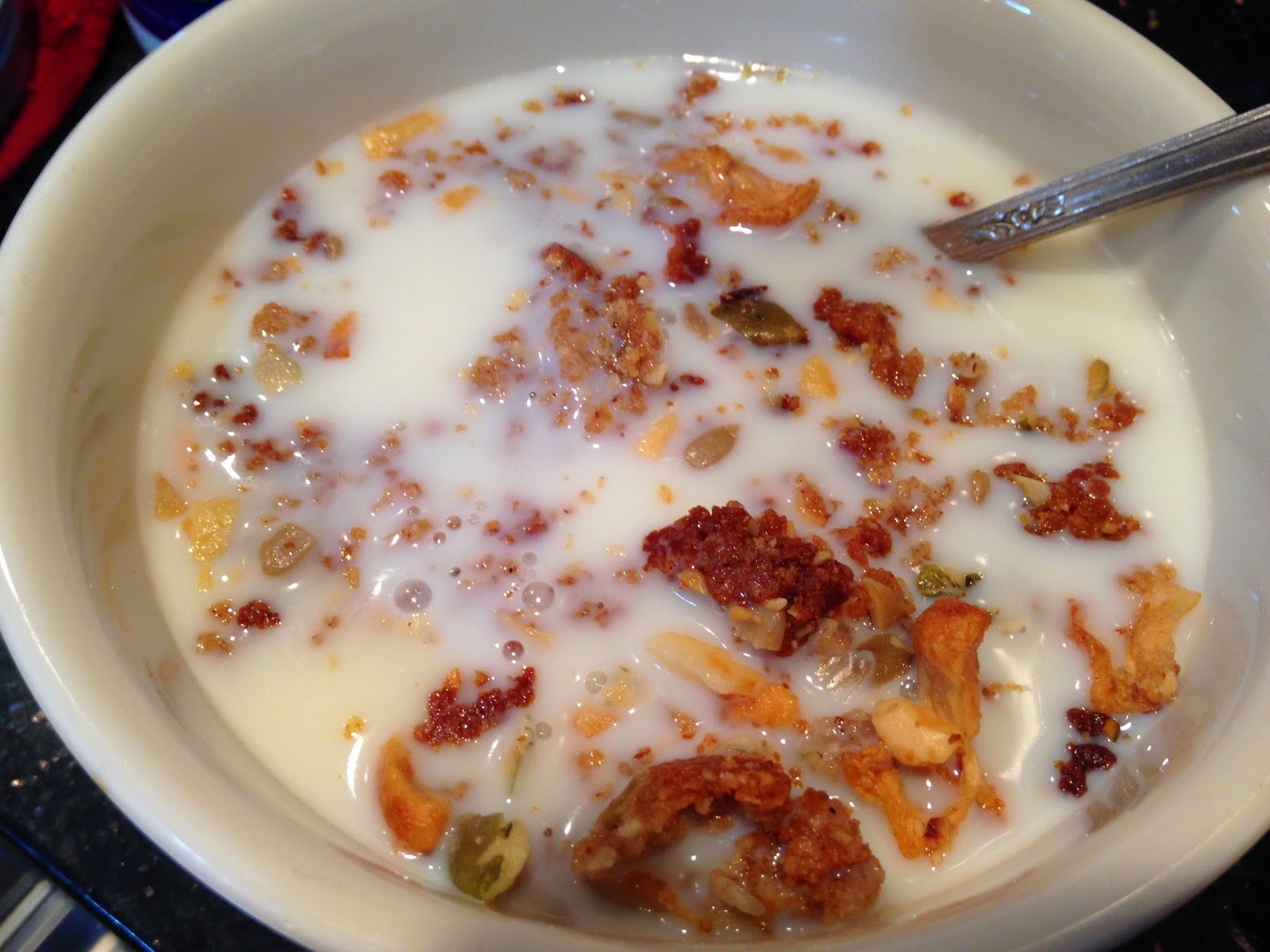
My husband likes to eat the granola over his yogurt. I prefer it in a bowl with lots of raw milk over it. You can adjust the recipe to better suit your tastes. Enjoy!


Viola and Pansy - our new chicks
Well, we've (mostly) stuck it out for 6 months now. We still eat a primarily GAPS diet, though I haven't made soup nearly often enough lately, and we've started to include some sprouted oats, rice, and potatoes on occasion (mostly because grains and starches are cheap and our budget couldn't afford being GAPS-only any more).

On the whole, I have nothing but good things to say for the diet. Although we had started a gluten free - casein free diet in July, and that had a noticeably positive effect on my son, it wasn't until we'd been on the GAPS diet for probably 4 months or so that I really started to see the positive effects with my daughters. (I should note that when we started GAPS we ended the casein free part of our previous diet. GAPS allows for many yummy dairy products, which I think is a huge boon over the Paleo diet.)

I think our improvements have been most notable when we have a minor lapse. (It follows that old adage that you don't know what you've got until it's gone.) We must have eaten something last week (we think it might have been the Pad Thai that I bought for the family only because we had an incredibly long track meet to attend and Pad Thai was the only at-least-its-gluten-free item available) that effected us all negatively. First one of my daughters came up to me and complained that something was wrong because her acne was back. (More on that in a moment.) Then my son said that he was experiencing some of his over-thinking-things problems. Then the kids started to have spats that ended up in one kid or the other stomping off. It was a clear sign that something was amiss.

Resting in the car on the way home
But the fact that it was so clear that something was wrong just acts as proof to me that the diet has been helping us. The kids used to have fights all the time. They used to have horrible acne. The kids had regular headaches and the girls would come home from school early on occasion with migraines. My son had trouble sleeping, trouble controlling his temper, and issues with depression and over thinking problems. But our trip to Boise for spring break made me suddenly realize that the whole tenor of our relationships as a family had changed.

When we travel, we've had to put our son in the front seat and I'd sit in the back with the girls. That kept the three of them from fighting non-stop during the trip. Tempers would often still run high and by the end of our "vacation" I'd be in serous need of a vacation. But this time I went to put my stuff in the back seat like I usually do and the kids told me, "No mom. Nathan's going to sit in the back this time." And he did! And they had all talked it out between them before hand and come to that agreement!! And they did fine during the whole trip and there wasn't any arguing!!!  It was phenomenal and a huge indicator to me that the diet wasn't just helping Nathan, but it was helping the girls as well.

Then came the pad thai and the slipping a little back into our old problems. One of the incentives I had used with the girls to get them to try this diet with us was that I thought it might put a stop to both their headaches and their acne. After a few months on the diet they whined that the diet wasn't really helping with either. So when Naomi came out and told me that something was wrong, her acne was back, I said, "Oh! So you mean it had gone away?!" Immediately she realized that the diet had helped keep her skin clear and she hadn't even really realized or acknowledged that until that moment. Naomi also had a headache this past weekend. And she and her brother had a fight just last night.

Pretty drink from cafe in Nampa, ID
I've got to say that when we slipped back into our old problems, they still didn't reach the scale or scope that they had reached before we started the diet. It's still clear to me that the diet has helped, even when we've messed up. I imagine it like a bottle that used to be full of dirty water. The diet has helped us get to a point where the water is slowly filtering. We're not all the way cleaned up yet, and any dirty inputs still put us right back to looking yucky, but we're clearing back up faster and over time growing gradually cleaner and cleaner as we stick to the diet. It's been incentive enough to keep us all going on this diet despite the difficulty in having enough snacks on hand for munching. (That has been, hands down, the kids biggest struggle. What we eat isn't a problem. But having quick and easy "grab and go" food on hand requires work on my part (or theirs) and has been hard to fit into our daily routines.)

I haven't talked about my own improvements lately. One of my hopes had been that the diet would help to free me from spring and autumn seasonal allergies. And I can tell it's working. It's still like that bottle of water analogy where I'm still on the dirty side. But I know that I'm cleaner than I was because the symptoms, while still there, are manageable now. Before I'd wake up and within a minute my nose would itch and run so badly that it didn't matter how tired I was, I'd have to get up and blow my nose for almost an hour straight until the Zyrtec would kick in. But now I get up, my nose itches a little, I might blow it once or twice, and then it's over. I might sneeze a couple of times a day compared to the several times an hour I've experienced in the past. And my nose itches a bit, but then it goes away. So I'm certainly not out of the woods, but I can at least see the meadow through the trees. 

Changing the Diet

Almond cookies that I made for the kids on Valentines day.

We're almost at the 5 month point on the GAPS diet. We've all gotten quite used to what we can eat, what we can't, and we've found decent alternatives for a lot of the things we miss. But...

But the diet, as we've been doing it, at least, is far too expensive. I suppose I could do it cheaper if I spent all day, every day, cooking (and washing dishes). But I don't want to spend my life doing nothing but cooking. As it stands right now it takes me about 30 minutes to get everyone's breakfast made. (It helps that the girls are completely maxed out on eggs and prefer fresh fruit. Fruit has been the quickest, easiest snack we've found. It takes another 20 minutes or so to put the kids' lunches together plus another 15 - 20 minutes to make my own lunch. And I spend anywhere from 30 minutes to an hour making dinner. And that doesn't include making snacks for the kids (which has been the hardest part of all. I'm not spending a whole lot more time making regular meals. But snacks go so quickly that keeping the house stocked takes a lot of time. Which is where we've turned to store bought alternatives. Which is partly why our expenses are high.)

Let me first introduce you to some store bought snacks that have been lifesavers for us on this diet.

Shelton's Original Turkey Smoke Snack Sticks: These are the only sticks by Shelton's without sugar added. And they're the only meat stick/jerky that I've found (at our local grocer) that doesn't have added sugar or grain.
MMLocal Pear (not apple) Sauce: This has been a huge helper in the school lunch and quick breakfast/snack realm.
Go Raw cookies: Chocolate is the kids favorite and Masala Chai is mine. I need to learn to make these at home. They're made from very simple ingredients.
PaleoKrunch Bars: The kids like the original and the espresso. They also have pumpkin, bacon, and other flavors. But man are they pricey. This is another one I should learn how to make. (Oh! And check this out. I just found that someone posted their own recipe online. I'll have to check this out.) PaleoKrunch also has granola. The Apple Pie is the only one we've tried, but it was devoured incredibly quickly.

These items have made the diet easier to accomplish while at the same time shooting our food budget to the moon. (Nuts, nut flours, and nut butters, meat, and lots of fresh veggies aren't particularly cheap either.)

So, even though I had hoped to make it at least to the 6 month mark for the GAPS diet, we're going to start making a transition to a more Weston Price-ish diet. I bought some red skinned potatoes and brown rice at the store today. I'm going to slowly ease us into eating starches again. And I'm going to start learning all about sprouting.

Grains are what make eating affordable. We're going to continue to avoid gluten, but I feel like we need to mix some cheaper foods into our diet so that we can financially afford to keep eating, and I'm hoping that by introducing a few grains, I'll have a wider variety of easy to make snack options available to us as well as a few more options that I can purchase at the store.

The other thing that I've decided to change is the amount of probiotic pills that we take. I've been giving everyone two a day and I've been varying the brand in hopes of getting the widest variety of good bugs that we can get. But I haven't really noticed any significant change in myself or my daughters due to the pills. So for the three of us, we're going to rely more upon fermented veggies (like Bubbie's Sauerkraut and Wildbrine's Red Beet & Cabbage Sauerkraut Salad when we can find it). I'm going to keep my son on the probiotics because he's the one that's had the most tummy issues, so I don't want to back off on the probiotics just yet.

This change in our diet is going to be reflected in my blog. The recipes may start to contain some potatoes, rice, quinoa, etc. I'm going to be learning all about sprouting and cooking with sprouted grains, so I'll try to share what I learn. And, of course, I'll be letting you know how the change in our diet affects how we feel, physically and emotionally. 
We've been enjoying the peanut butter cookie recipe I found recently, but I felt like it was time to spread our wings again and try something new. So I made up a chocolate cookie recipe that can be eaten with or without the peanut butter cookies (depending on if you're looking for a Reeses affect or not). I decided to leave coconut flour out of this recipe since I'm starting to think coconut flour is not my tummy's best friend.

Ingredients
2 1/4 cup almond flour
1/2 cup cocoa powder
1/2 cup honey
1/2 cup butter
1 teaspoon salt
1 teaspoon soda

Directions
Mix ingredients together and drop by rounded tablespoons onto a cookie tray. Cook for 7 minutes at 350F.


Chocolate cookies go well with a side of peanut butter cookies

Gack! Liver! Run Away!

Why does the most nutritious part of the animal have to be the organ meats? Really?

I tried making liver paté yesterday. I know it's good for us. My mom used to serve liver and onions at least once a month and it didn't kill me so I figured I should provide the same nutrition to my kids. I pulled out Sally Fallon's cookbook, Nourishing Traditions, followed the directions, grabbed a spoon and took a nibble, ... only to want to puke it all up immediately. It was horrible!


Here's what I emailed to my sister (who has been feeding liver paté to her family and they actually eat it, so she must be doing something right):
i just made chicken liver pate using the recipe in the book. i must not have added enough wine. i assume the wine is so that you’re too drunk to care about the flavor.  i just took one small nibble of the pate after blending it up and almost barfed.
ack!

Whole Foods has a liverwurst that I like the flavor of. I think I'll have to stick to that. In the meantime, I have a container of chicken liver paté in the fridge that I need to use up. My sis recommended mixing it into meatballs. I'm hoping meatloaf will work. *sigh*

On a happier note, the girls have had far fewer headaches than they used to have before we started this diet. They still have occasional, embarrassing acne, though. We had hoped the diet would clear that up. So far, no dice. And Nathan has been a much more cheerful kid than he was this time last year... or this time the year before that... or even this time the year before that. I feel like I'm getting my son back. 
You'll see some posts repeated because they contain our story and a recipe, or helpful information, but also a bit of how that relates to us.

Informational Posts

Putting the Pieces Together (24 Sept 13): includes the video where I first learned about the GAPS diet
GAPS Intro Diet - The Six Stages (27 Sept 13): As I was trying to figure out how to tell when to move from one stage to the next (which I never really did wrap my head around) I also wanted to get a better grasp of what we could eat in each stage. This post links to recipes and ideas for each stage. 
What We Eat Affects Everything (4 Oct 13): This links to an article about how food affects health.
GAPS Diet Recipes By Stage (5 Oct 13): I didn't want to start the diet until I knew there'd be things we could eat. So I started collecting recipes. 
Genetic Roulette Movie Streamable for Free (6 Nov 13): Link to the movie about how we're experimenting on ourselves with the Standard American Diet (SAD).
Articles on Grains vs. Fats, Microbes, etc. - a reference page (1 Jan 14): I started a resource page so that if someone asked me, "What about...?" I could look it up quickly.Something Has Happened in a Pervasive Fashion from the Environmental Perspective (11 Jan 14): Article on how things are changing in the world of food and it's affecting our health.


Our story - posts listed chronologically

Putting the Pieces Together (24 Sept 13): includes the video where I first learned about the GAPS diet
Day One-ish: Stage One of the GAPS Diet begins (11 Oct 13): The beginning of a broth based week.
The Kids Reaction to Stage One of the GAPS Diet (12 Oct 13): The kids didn't like stage one.
Yogurt and Eggs! (13 Oct 13): We moved through the stages quickly. Yogurt and eggs made such a difference.
Homemade Yogurt Is Rocking Our World (14 Oct 13): Homemade yogurt is really easy to make and it's cheaper than buying store bought. Better for you, too (because you know exactly what's in it and it's fresher than store bought so the little live cultures are healthier when you eat them).
Adding Pancakes and Reviewing Goals (15 Oct 13): Pancakes felt a little more normal. But we still couldn't add much honey.
Stage Three: End of Week One (18 Oct 13): I started to lump days together at this point.
Celebrating... Despite Lack of Potatoes (21 Oct 13): We celebrated my mom's birthday and caught up with my sister who started the diet when we did.
Sweet Things That Are GAPS Friendly (24 Oct 13): I've found snacks to be the hardest part of the diet. You can't just buy them in the store anymore.
Coconut Milk, Kids' Lunches, and Cabbage Soup (24 Oct 13): Packing lunches took lots of prep work the night before.
Meggie Had a Bloody Lamb - And Other Tales of Failure (25 Oct 13): Things didn't always go as planned.
One of the Grossest Things I've Ever Done (28 Oct 13): I drank straight broth. Remember, I don't like the taste of meat.
Lack of Snacks (1 Nov 13): Our biggest struggle, having the time and ingenuity to create new snacks. There's lots of recipes out there, but it's a trial and error process finding things that the family will like.
One Month on the Full GAPS Diet - Little Change in Symptoms (25 Nov 13): Change did come, it just wasn't really noticeable for us yet.
Woot! Two Small Victories Show That the Diet is Healing Me (6 Dec 13): Progress! Finally.
Gack! Liver! Run away! (10 Feb 13): I know we need to be eating more organ meats because they're so nutritious, but honestly, liver?!!


Recipes - posts listed alphabetically by type

GAPS Diet Recipes By Stage (5 Oct 13): I didn't want to start the diet until I knew there'd be things we could eat. So I started collecting recipes.

Savory Dishes
Cauliflower "Rice" Recipe (15 Oct 13): This is really yummy, especially with lots of butter. (Remember, butter is good for you.) It doesn't soak up sauces like regular rice, but it makes a passable base for stir fries and other dishes that you're used to eating with rice.
Pork Cutlets - GAPS Style (22 Oct 13): I started buying meat from a local ranch.
Fresh Cabbage Soup (7 Dec 13): Easy to make. Yummy.
Apple Carrot Curry Soup (7 Dec 13): Sooo delicious!
Greek-ish Salad (10 Jan 14): This is one of the family's faves. The kids love the chicken.
Chicken Adobo (11 Jan 14): Easy crock pot recipe.


Snacks/Desserts
Almond Raisin Cookies (25 Sept 13): These are made with almond flour and a bit of coconut flour. To make them even more almondy, add a bit of almond extract.
Squash Fudge (24 Oct 13): Creamy and yummy!
Fried Bananas with Caramel and Cream (26 Oct 13): Yeah, baby!
Panna Cotta with Fruit Sauce Topping (3 Nov 13): This was a big hit. But the kids preferred when I used the coconut milk with guar gum in it.
Banana Ice Cream - Dairy Free, Easy to Make, and Yummy (17 Nov 13): Soooo easy to make and so yummy!
Grain-Free Muffin Recipe (21 Nov 13): Basic recipe that's easily adapted.
Coconut Pancakes - Paleo / GAPS (29 Nov 13): The kids loved these.
Soooo Simple Chia Mousse - GAPS / Paleo Easy Peasy Dessert (29 Nov 13): Good for school lunches
Coconut Flour Crepes - GAPS/Paleo (29 Nov 13): Crepes feel decadent and help you feel less like you're on a diet.
Grain Free Crackers (15 Dec 13): Finally, something to dip in stuff besides veggies.
Flourless Chocolate Cake (15 Dec 13): Pretty rich and dark. Good with whipped cream. (You don't have to add sugar to whipped cream to enjoy it.)
Simple Cream Custard (31 Dec 13): Rich. I like it with nutmeg on top.
Grain-Free Peanut Butter Cookies (14 Jan 14): It's hard to make enough of these at a time. The kids plow through them.
Chocolate Cookies (11 Feb 14): So easy to make. And there's no eggs, so you can munch on the batter!
Nathan asked me to make peanut butter cookies the other day. He had been eating a lot of peanut butter on apples until we realized that fruit was contributing to his runny nose. So then he switched to celery and peanut butter, but he said he feels like celery detracts rather than adds to the overall taste of the snack. So he asked me to try making some cookies.

I found a recipe on Detoxinista that I've modified only a wee bit (subtracted chocolate chips, added coconut flour).


Ingredients
1 1/4 cup peanut butter (Use a peanut butter that doesn't already have sugar or other things in it. Peanuts and salt should be all there is on the ingredient list. I used creamy peanut butter, but it probably doesn't matter.)
1/3 cup honey
1/4 cup coconut flour
1 large egg
1/2 teaspoon baking soda
1/2 teaspoon salt

Directions
1. Mix all of the ingredients together.
2. The batter will be fairly wet. Use 2 spoons or a cookie scoop to drop by rounded spoonfuls onto a cookie sheet. If you'd like cookies with fork pressed designs, let the dough sit for about 5 minutes. That will give the coconut flour time to soak up some of the liquid. You should be able to roll and smash the cookies then.
3. Cook for 6 minutes. By the time my cookies started to brown on top, they were burned on the bottom. So the sooner you take them out the better.

Chella David, Ph.D. and
Joseph Murray, M.D.
Celiac disease is on the rise, and not just because diagnostic tests are improving or that awareness is increasing. A study by Dr. Joseph Murray has found that people today are 4 times more likely to have celiac disease than people only 50 years ago. An article on the Mayo clinic's website describes Dr. Murray's study:
Dr. Murray's team tested the 50-year-old blood for gluten antibodies, assuming that 1 percent would be positive — the same as today's rate of celiac disease. But the number of positive results was far smaller, indicating that celiac disease was extremely rare among those young airmen. Surprised, the researchers compared those results with two recently collected sets from Olmsted County, Minn. One blood-sample set matched the birth years of the airmen. Those elderly men were four times likelier to have celiac disease than their contemporaries tested 50 years earlier. The second set matched the ages of the airmen at the time their blood was drawn. Today's young men were 4.5 times likelier to have celiac disease than the 1950s recruits. "This tells us that whatever has happened with celiac disease has happened since 1950," Dr. Murray says. "This increase has affected young and old people. It suggests something has happened in a pervasive fashion from the environmental perspective." (Celiac Disease: On the Rise, July 2010) 
Dr. Murray also found that celiac disease could be deadly when undiagnosed.

Unfortunately this article didn't address problems of gluten intolerance or gut disbiosis, which I'm more interested in. But the fact that celiac disease is on the rise shows that something in our environment has changed. And just because it hasn't caused celiac disease in us doesn't mean that it isn't affecting us some other way.

Dr. Murray hypothesizes a bit about what could have changed in the last 50 years to cause these health changes. According to the article from the Mayo clinic:
Dr. Murray lists several possible environmental causes of celiac disease. The "hygiene hypothesis" suggests the modern environment is so clean that the immune system has little to attack and turns on itself. Another potential culprit is the 21st century diet. Although overall wheat consumption hasn't increased, the ways wheat is processed and eaten have changed dramatically. "Many of the processed foods we eat were not in existence 50 years ago," Dr. Murray says. Modern wheat also differs from older strains because of hybridization. Dr. Murray's team hopes someday to collaborate with researchers on growing archival or legacy wheat, so it can be compared to modern strains.

Chicken Adobo


This was pretty darn easy to make and the kids went back for seconds. I found the recipe on JustaPinch.com.

Ingredients
8 chicken thighs (I used 4 thighs and 4 legs.)
5 Tbsp coconut oil
1/2 c liquid aminos (which I like better than soy sauce and it's better for you)
1 can (about 1 1/2 cups) coconut milk
1 c vinegar (I used white wine vinegar.)
8 clove garlic, finely chopped
1 Tbsp fresh ginger, finely chopped
4 bay leaves
1 tsp whole peppercorns

Directions
1. I used an enameled cast iron pan to cook this in, though the recipe called for a large skillet. Melt the coconut oil then add the chicken. Cook it in the oil until the outside looks mostly cooked.
2. While the chicken is cooking, mix the liquid aminos, coconut milk, garlic, ginger, peppecorns and bay leaves in another boil. Once the chicken has cooked for awhile (about 10 minutes or so) pour the sauce over it and bring to a boil.
3. Reduce to a simmer until the liquid evaporates. (I suppose if you're going to serve this with rice or another side dish that would be good with sauce, you might simmer until there's just enough liquid left for a nice sauce to go along with the chicken.)

I may try adding some veggies to this next time just so there's more than just meat and so that I can join in as well. Carrrots and cabbage might be interesting additions. 

Greek-ish Salad

I made salad for dinner tonight. It's the first time I've made a salad that the kids asked for more of. So I thought I'd post photos and a quick description of what I did to make the salad.


The Chicken
I should have made more chicken. I cooked up two chicken breasts for 3 kids. I heated a cast iron skillet and melted a huge hunk o' coconut oil in it. (Maybe 1/4 - 1/3 cup of coconut oil.) I cooked the chicken on high heat until both sides were well browned. When the chicken was about two thirds done it dawned on me that now would be a good time to add seasonings. So I started with salt and pepper. Then I decided to pull out the big guns and throw some Trader Joe's 21 Seasoning Salute on there. That stuff could make cardboard yummy. Once the outsides were nicely browned, I put the chicken into the oven which had been preheated to 350. I have no idea how long it was in there. I basically decided to pull it out when I was done checking my email, so 20 - 30 minutes?

The Salad
I had bought one of those prepackaged salad mixes. But I knew that wouldn't be enough. So I used half a head of leaf lettuce, then topped that off with boxed lettuce mix, then sprinkled toppings on top of that. Toppings included pitted kalamata olives, chopped red onion, and sundried tomatoes. I had meant to add feta as well, but I forgot to toss it in. Ditto with some pomegranate seeds. Both would have gone well with the salad, but as I said, I got kudos from the kids even without those things in there. The only thing I might want to add that wasn't in here was some nuts - maybe pine nuts. Slice the chicken and put it on top. For myself I sliced up an egg instead.

The Dressing
This dressing is super easy to make and super yummy. The key is having quality ingredients. I put in a huge scoop of mustard (maybe 3 tablespoons worth?), the rest of the balsamic vinegar in the bottle (maybe another 3 - 4 tablespoons), and a whole lotta olive oil (maybe 1/4 -1/3 cup?). I whipped it up with a fork until it was emulsified. I drizzled some on top of mine, but Naomi had asked for hers on the side, so I put it on the side for all three kids. They ended up using it all up.


People keep sending me links for articles or videos related to diet. I thought I'd start a page where I list the articles in case I want to refer back to any of them later. So this page will be updated as I come across new articles.

The importance of our microbiome (healthy gut flora is key)

From NPR
Gut Bacteria Might Guide The Workings Of Our Minds, on Health News from NPR, November 18, 2013. Explains how there's growing evidence that the bacteria in our gut affect our mental health. The page includes an audio and a video portion. The video is a cartoon that explains what our microbiome is, how we get it, and what could be causing problems with it.

Microbiology and Technology of Fermented Foods, by Robert W. Hutkins. This is a somewhat technical document including 400 pages of information about fermented foods - their history, types of microbes, etc.

Your gut’s what you eat, too, by Peter Reuell in the Harvard Gazette. Studies show that a change in diet can have immediate affects upon our microbiome and that a change in diet can increase the amount of bilophila in the gut, a microbe known to cause colitis in mice.

Living in a Microbial World, by David Shardt in the Nutrition Action Health Letter, July/August 2012. This is essentially a microbe primer covering topics such as what our microbiome is, where it comes from, what affects it, and how it can be healed.


From Balanced Bites
The importance of healthy fats in our diet

Your “Healthy” Diet Could Be Quietly Killing Your Brain, Psychology Today, October 9, 2013. This article focuses primarily on brain health and the importance of a fat rich, low carb diet to avoid dementia/alzheimers.

Fats: Which to Eat & Which to Ditch, from Balanced Bites by Diane Sanfilippo, July 2010. This article gives guidelines about which fats are good to eat and which aren't.

Eating fat is good for you: Doctors change their minds after 40 years, by Jo Willey of the Express. Studies in the 70s showed a correlation between saturated fats and heart disease, but they never proved causation. New studies show that natural fats such as butter are better for the heart.


Problems with grains - GMOs, gluten, gliadin, and other issues

Modern wheat a "perfect, chronic poison," doctor says, on CBS This Morning, June 21, 2013. Dr. William Davis explains that wheat has been changed over the last 30 years. It now contains gliadin which is an issue for all consumers, not just those with celiac disease or a gluten intolerance.

How Grains Are Killing You Slowly, by Katie of the Wellness Mama. Katie explains how phytic acid in grains causes problems for the gut. (Sprouting the grain helps to remove the phytic acid.) She also touches on gluten and lectins.

Why Are So Many Allergic to Wheat Now?, by Melissa Melton of Truthstream Media, May 2, 2013. Melton shows that recent changes to wheat coincide with increased incidences of allergies, autism, and other issues. There's no proof of causality given, but a relationship is implied.

Arsenic in Your Food, from Consumer Reports, November 2012. Consumer Reports found that several brands of rice products contained high levels of inorganic arsenic, including organic brands. And that because the arsenic is often concentrated in the bran, brown rice tended to have higher levels than white rice. One suggestion to reduce the level of arsenic in rice is to rinse the rise before cooking, then cook with 6 cups of water to 1 cup of rice and pour off extra water once cooked. This washes away some nutrients but also removes arsenic. A more recent article entitled, There’s Still Arsenic in Rice (and It’s Probably Not Going Away), was published by Takepart.com on September 11, 2013. Once again, brown rice still looks problematic.


Milk/Dairy Issues

“The Devil in the Milk” — Dr. Thomas Cowan on how the A1 – A2 factor explains why even raw milk sometimes does not seem to be enough of an improvement over “store-bought”, by TheBovine, March 20, 2009. The type of cow that is producing the milk can affect how well people digest it.


Healthy Diet (This is more of an umbrella section for posts, videos, etc. that cover several topics.)

Nourishing Traditional Diets (2 hour video), by Sally Fallon of the Weston A. Price Foundation. In this video Sally Fallon explains how Weston Price explored traditional diets and what conclusions he came to regarding what we should be eating for optimal health. It includes many photos taken by Price during his travels.  This video is long, but worth watching.